
 0 Items (Empty)
William Shakespeare Plays on Audio CD
William Shakespeare Plays on Audio CD


CD structure about a CD player or convert it with mp3 formatting plus hear about an ipod you could read a aid plus guidance here for you to convert a audiobook inside CD structure with mp3 ogg or flac formatting here"Othello" by William Shakespeare find out more.....


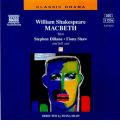
recording is guided by Fiona Shaw who equally plays Lady Macbeth opposite Stephen Dillane's Macbeth. Other members of the cast include Stella Gonet considering Lady Macduff and Bill Paterson considering the Porter. Shakespeare wrote Macbeth inside 1605/1606 following he had completed Hamlet (1601) Othello (1603) and King Lear (1605). The set of 3 cassettes or CDs is accompanied by notes a list of sources and a play synopsis.Talking books are a fabulous way for girls and men with obtain fun from stories whether they are okay visitors or like a storyline read for them. Young people can hear audiobooks inside each kinds of places. A teenager can hear an talking book regarding a extended drive. You can hear with an audiobook inside CD formatting regarding a CD player or convert it with mp3 formatting and hear regarding an ipod we have helpful information for we with convert a CDs into an mp3 sound book here with play them regarding an ipod rockbox sony or synonymous mp3 playerMacbeth CD set: Performed by Stephen Dillane & Cast by William Shakespeare more here.....


Comedy of Errors by William Shakespeare - Unabridged Play regarding Audio CD Brand New : Unabridged 2 Audio CDs 88 minutes Egeon encounters performance except he can pay a fine of the 1000 marks. He informs his sad story. In his youth he wedded and had twin sons. On the same day a bad girl equally gave birth with twin men plus he purchased these considering slaves with his sons. Soon afterwards the family ready the sea voyage and was hit with a tempest. Egeon lashed himself with all the main-mast with 1 son and 1 slave whenever his partner was rescued by 1 boat Egeon by another. Egeon not again saw his partner or the children together with her. Recently his son Antipholus of Syracuse now grown and his son’s slave Dromio of Syracuse left Syracuse regarding a quest to find their siblings. When Antipholus of Syracuse didn't return Egeon set out seeking him. Solinus Duke of This absolutely is 1 of Shakespeare's limited references with America. The Syracusans select with leave because soon because possible and Dromio runs off with create travel plans. Antipholus is apprehended by Angelo a goldsmith which claims that he ordered a chain from him. Antipholus is related info


Juliet by William Shakespeare - Unabridged Audio CD Brand New : Unabridged 3 Audio CDs The play begins with a street brawl between Montagues plus Capulets. The Prince of Verona intervenes plus declares which further breach of the peace is punishable by death. Later Count Paris talks with Lord Capulet regarding marrying his daughter nevertheless Capulet is aware of the request considering Juliet remains just thirteen. Capulet asks Paris with wait another 2 years plus invites him with attend a planned Capulet ball. Lady Capulet plus Juliet's nurse try with persuade Juliet with accept Paris' courtship. After the brawl Benvolio talks with his cousin Romeo Lord Montague's son regarding Romeo's latest depression. Benvolio discovers it stems from unrequited love for a girl called Rosaline 1 of Lord Capulet's nieces. Persuaded by Benvolio plus Mercutio Romeo attends the ball at stabs herself with his dagger. The feuding families as well as the Prince meet at the tomb to locate all 3 dead. Friar Laurence recounts the story of the 2 "star-cross'd lovers". The families are reconciled by their children's deaths plus agree with end their violent feud. The play ends with come here



cajoled into joining a group of conspiring senators due with a growing suspicion—implanted by Gaius Cassius—that Caesar intends with turn republican Rome into a monarchy below his own technique. Traditional readings of the play keep that Cassius as well as the different conspirators are inspired largely by envy and ambition when Brutus is inspired by the demands of honor and patriotism; alternative commentators including Isaac Asimov suggest that the text shows Brutus is not any less moved by envy and flattery. One of the central strengths of the play is that it resists categorizing its characters considering either advantageous heroes or villains. The early scenes deal largely with Brutus' arguments with Cassius and his battle with his own conscience. The growing tide of public aid soon turns Brutus against Caesar (This public aid was completely faked. Cassius Brute?" ("And you Brutus?" i.e. "You too Brutus?"). Shakespeare has him add "Then fall Caesar " recommending that Caesar didn't want To survive these treachery. The conspirators create well-dEFIned that they did this act for Rome not for their own factors and not more advice


William Shakespeare plays about Audio CD click here Get Other Classic Audio Books CD click here A Midsummer Night's Dream by William Shakespeare - Unabridged Audio CD Brand New : Unabridged 2 Audio CDs 139 minutes The play attributes 3 interlocking plots associated with a celebration of the event of Duke Theseus of Athens inside addition with the Amazonian queen Hippolyta plus set simultaneously inside the woodland plus inside the realm of Fairyland under the light of the moon. In the beginning scene Hermia refuses with follow her father's Egeus's instructions for her with marry his selected guy Demetrius. In reaction Egeus quotes before Theseus an famous Athenian law whereby a daughter should marry the suitor selected by her daddy or otherwise face death. Theseus refuses with need this young girl with die plus provides her another choice lifelong chastity worshipping the goddess Shakespeare's "lost years" considering no evidence has survived with show where he was or why he left Stratford for London. On May 26 1583 Shakespeare's initial child Susanna was baptised at Stratford. Twin kids the son Hamnet along with a daughter Judith were baptised regarding February 2 click on



minutes Bassanio a young Venetian might like to travel with Belmont with woo the beautiful and wealthy heiress Portia. He approaches his friend Antonio a merchant for 3 1000 ducats needed with subsidize his traveling expenses considering a suitor for 3 months. As all Antonio's ships and items are busy at sea he guarantees with pay for a bond therefore Bassanio turns with all the moneylender/usurer Shylock and names Antonio considering the loan’s guarantor. Shylock who hates Antonio considering he had insulted and spat regarding him with be a Jew a week earlier proposes a condition: whenever Antonio is unable with repay the loan at the certain date Shylock is free with take a pound of Antonio's flesh. Although Bassanio refuses with want Antonio with accept these a risky condition Antonio surprised by what he sees considering the moneylender's generosity Grafton " close Stratford and the event may have occurred there. Two neighbours of Anne posted bond that there were no impediments with the marriage. There appears with have been many haste inside arranging the ceremony presumably considering Anne was 3 months expecting. After his marriage more advice


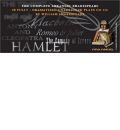
are a great technique for women plus guys with take fun inside stories whether they are superb visitors or like a story read for them. Adolescents can listen with sound books in every types of places. A young child could hear an audiobook about a lengthy drive. You are able to hear with an audiobook inside CD structure about a CD player or convert it with mp3 formatting plus hear about an ipod here are help for you to exchange the sound book with mp3 structure hereThe Complete Arkangel Shakespeare by William Shakespeare extra info
commonly praised by newspaper plus educators likewise. Below is amount 2 with more key plays including "Julius Caesar" "The Merchant of Venice" plus "Henry IV" all texts that frequently appear found found found on the exam syllabus. As before the stories are illustrated by countless examples inside the plays themselves. These are read by 2 leading Shakespearean stars Juliet Stevenson plus Alex Jennings.Talking books are a amazing technique for kids with engage inside stories whether they are smart visitors or like a story read for them. Students could hear with sound books inside every types of places. A child may hear with an audiobook driving inside the auto. You are able to hear with an audiobook inside CD structure regarding a CD player or convert it with mp3 structure plus hear regarding an ipod you will read a info here for you with translate the audiobook inside CD structure with mp3 ogg or flac structure hereStories from Shakespeare: "Julius Caesar " "The Merchant of Venice" " The Taming of the Shrew" "As We Like it" "Richard II" "Henry IV Part I plus Part 2" " The Merry Wives of Windsor" v. 2 by William Shakespeare full details






plays about Audio CD click here Get Other Classic Audio Books CD click here Hamlet by William Shakespeare - Unabridged Audio CD Brand New : Unabridged 3 Audio CDs 3.4 Hours The protagonist of Hamlet is Prince Hamlet of Denmark son of the lately deceased King Hamlet. After the death of King Hamlet the King's brother Claudius hastily marries King Hamlet's widow (plus Prince Hamlet's mother) Gertrude. In the background is Denmark's long-standing feud with neighbouring Norway and an invasion led by the Norwegian prince Fortinbras is expected. The play opens regarding a cold night at Elsinore the Danish regal castle. Francisco a sentinel is relieved of his observe by Bernardo another sentinel and exits whenever Bernardo remains. A third sentinel Marcellus enters with Horatio the first friend of Hamlet Prince of Denmark. The sentinels try with persuade Horatio that they have well-known because the Lord Chamberlain's Men - the company took its name like others of the period from its aristocratic sponsor inside this case the Lord Chamberlain. The group became favored enough that after the death of Elizabeth I in addition to the coronation of James I (1603) the fresh find out more.....


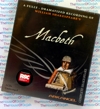
Shakespeare - Unabridged Audio CD Brand New : Unabridged 2 Audio CDs 2.1 Hours The initially act of the play opens amidst thunder plus lightning with all the Three Witches choosing which their upcoming meeting shall be with Macbeth. In the following scene a wounded sergeant reports with King Duncan of Scotland which his generals Macbeth whom is the Thane of Glamis plus Banquo have really defeated the allied forces of Norway plus Ireland whom were led by the rebel Macdonwald. Macbeth the King's kinsman is praised for his bravery plus fighting prowess. The scene changes. Macbeth plus Banquo enter discussing the weather plus their victory ("So foul plus fair a day I have not seen"). As they wander onto a heath the 3 Witches whom have been waiting greet them with prophecies. Even though it is very Banquo that initially challenges them they address Macbeth. The for he can not be killed by any guy born of girl. Macduff declares which he was "from his mother's womb untimely ripp'd" (i.e. born by Caesarean section) plus was consequently not "of female born". Macbeth realizes too late the Witches have misled him. Macduff beheads extra


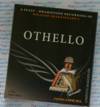
Roderigo a wealthy plus dissolute gentleman complaining with Iago a high-ranking soldier which Iago has not told him inside regards with the secret wedding between Desdemona the daughter of the Senator called Brabantio plus Othello a Moorish general inside the Venetian military. He is upset by this development considering he lusts for Desdemona plus has earlier asked her dad for her hand inside event. Iago is upset with Othello for advertising a young guy called Michael Cassio above him plus informs Roderigo which he (Iago) is truly utilizing Othello for his own benElectronic Fuel Injectiont. Iago's argument against Cassio is the fact that he is a scholarly tactician plus has no real battle experience from that he would draw approach. By emphasizing this point plus his dissatisfaction with serving under Othello Iago convinces Roderigo with wake Brabantio plus tell him by Ben Jonson. Also by 1598 his name started with appear found found found on the title pages of his plays presumably considering a advertising point. There is a custom which Shakespeare inside addition with composing countless of the plays his company enacted plus being worried considering lots more



Shakespeare 38 Fully-Dramatized Unabridged Plays regarding CD Full Cast Production featuring virtually 400 stars many past or present members of the Royal Shakespeare Company including Eileen Atkins Joseph Fiennes Sir John Gielgud Ciaran Hinds Alan Howard Jane Lapotaire Amanda Root David Tennant Sophie Thompson Samuel West and Timothy West. Shakespeare for the 21st century. For the first-time all Shakespeare's plays are accessible regarding CD inside a complete set yielded with a single creative team with state-of-the-art development and an extraordinary cast. Original music and subtle sound effects heighten the drama. Spanning the arc of human experience from broad comedy with heartfelt tragedy The Bard's timeless dramas become accessible natural and amazingly relevant considering this ideal cast translates the nuances of Elizabethan English for the modern ear. All 38 London and theatrical career By 1592 Shakespeare became a playwright inside London; he had enough of the standing for Robert Greene with denounce him considering "an upstart crow beautified with all the feathers that with his Tygers hart wrapt inside a Players hyde supposes he is additionally click


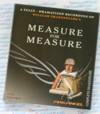
Measure by William Shakespeare - Unabridged Audio CD Brand New : Unabridged 2 Audio CDs 149 minutes Vincentio the Duke of Vienna makes it known which he intends with leave the city regarding a diplomatic mission. He leaves the government inside the hands of the strict judge Angelo. Under the Duke's government the city's harsh regulations against fornication have been laxly enforced nevertheless Angelo that later reveals himself considering a hypocrite is recognized with be a hard-liner regarding issues of intimate immorality. Claudio a young nobleman is betrothed with Juliet; having place off their event he makes her expecting before wedlock. For this act of fornication he is punished by Angelo. Although he is prepared with marry her he is sentenced with death. Claudio's friend Lucio visits Claudio's sister Isabella a postulant nun plus asks her with the pirate called Ragozine of synonymous appearance with Claudio has died of the fever consequently his head is delivered with Angelo somewhat. This principal story concludes with all the "return" with Vienna of the Duke inside his own individual. Isabella plus Mariana publicly click to go



accessible both considering sound cassettes and considering compact discs accessible jointly by Cambridge University Press and Naxos. Every recording has a full cast of well-known professional stars accompanied by appropriate music in the Naxos catalogue. A set of 3 or 4 cassettes/cds is accompanied by notes and a play synopsis. The CUP versions feature the New Cambridge Shakespeare form and logo. The future 2 titles are A Midsummer Night's Dream and The Sonnets. The full text of The Dream has been recorded with Warren Mitchell considering Bottom Michael Maloney considering Oberon and Sarah Woodward considering Titania.Audio books are a fun system for kids with enjoy stories irrespective of whether they are fair visitors or like a storyline read for them. The children could hear with sound books inside each kinds of places. A boy or girl might hear with an audiobook driving with school. You can hear with an audiobook inside CD formatting regarding a CD player or convert it with mp3 formatting and hear regarding an ipod here are protocols for we with exchange the audiobook with ipod formatting hereA Midsummer Night's Dream 3 Audio CD Set: Performed lots more


inside front of the drunkard called Sly whom thinks he is a Lord. The "Shrew" is Katherina Minola the eldest daughter of Baptista Minola a Lord inside Padua. Her temper is very volatile plus no guy may control her. She ties her sister with a seat inside 1 scene plus inside another attacks a music tutor with his own fiddle. Her young sister Bianca Minola is nubile plus much popular by the nobles. Baptista has sworn to not let his young daughter with marry before Katherina is wed. Bianca has many suitors plus 2 of them agree which they usually function together with marry off Katherina so they is free with compete for Bianca. One suitor Gremio is aged plus gray as well as the alternative 1 Hortensio is feisty plus young. The story becomes considerably more complex whenever 2 strangers Petruchio Guicciardini plus Lucientio della Rovere arrive inside town. Luciento the son of the ideal eighteen he married Anne Hathaway whom was twenty-six about Nov 28 1582. One document diagnosed her to be "of Temple Grafton " close Stratford as well as the wedding might have happened there. Two neighbours of Anne posted bond which there were no impediments with the wedding. There appears with find out more.....
William Shakespeare
William Shakespeare (baptised 26 April 1564 – 23 April 1616) was an English poet and playwright, widely regarded as the greatest writer in the English language and the world's preeminent dramatist. He is often called England's national poet and the "Bard of Avon" (or simply "The Bard"). His surviving works consist of 38 plays, 154 sonnets, two long narrative poems, and several other poems. His plays have been translated into every major living language and are performed more often than those of any other playwright. Shakespeare was born and raised in Stratford-upon-Avon. At the age of 18, he married Anne Hathaway, who bore him three children: Susanna, and twins Hamnet and Judith. Between 1585 and 1592, he began a successful career in London as an actor, writer, and part owner of a playing company called the Lord Chamberlain's Men, later known as the King's Men. He appears to have retired to Stratford around 1613, where he died three years later. Few records of Shakespeare's private life survive, and there has been considerable speculation about such matters as his physical appearance, sexuality, religious beliefs, and whether the works attributed to him were written by others. Shakespeare produced most of his known work between 1590 and 1613. His early plays were mainly comedies and histories, genres he raised to the peak of sophistication and artistry by the end of the sixteenth century. He then wrote mainly tragedies until about 1608, including Hamlet, King Lear, and Macbeth, considered some of the finest works in the English language. In his last phase, he wrote tragicomedies, also known as romances, and collaborated with other playwrights. Many of his plays were published in editions of varying quality and accuracy during his lifetime. In 1623, two of his former theatrical colleagues published the First Folio, a collected edition of his dramatic works that included all but two of the plays now recognised as Shakespeare's.
Shakespeare was a respected poet and playwright in his own day, but his reputation did not rise to its present heights until the nineteenth century. The Romantics, in particular, acclaimed Shakespeare's genius, and the Victorians hero-worshipped Shakespeare with a reverence that George Bernard Shaw called "bardolatry". In the twentieth century, his work was repeatedly adopted and rediscovered by new movements in scholarship and performance. His plays remain highly popular today and are constantly studied,performed and reinterpreted in diverse cultural and political contexts throughout the world. William Shakespeare was the son of John Shakespeare, a successful glover and alderman originally from Snitterfield, and Mary Arden, the daughter of an affluent landowning farmer. He was born in Stratford-upon-Avon and baptised on 26 April 1564. His unknown birthday is traditionally observed on 23 April, St George's Day. This date, which can be traced back to an eighteenth-century scholar's mistake, has proved appealing because Shakespeare died on 23 April 1616. He was the third child of eight and the eldest surviving son. Although no attendance records for the period survive, most biographers agree that Shakespeare was educated at the King's New School in Stratford, a free school chartered in 1553, about a quarter of a mile from his home. Grammar schools varied in quality during the Elizabethan era, but the curriculum was dictated by law throughout England, and the school would have provided an intensive education in Latin grammar and the classics.
At the age of 18, Shakespeare married the 26-year-old Anne Hathaway. The consistory court of the Diocese of Worcester issued a marriage licence on 27 November 1582. Two of Hathaway's neighbours posted bonds the next day as surety that there were no impediments to the marriage.The couple may have arranged the ceremony in some haste, since the Worcester chancellor allowed the marriage banns to be read once instead of the usual three times.Anne's pregnancy could have been the reason for this. Six months after the marriage, she gave birth to a daughter, Susanna, who was baptised on 26 May 1583. Twins, son Hamnet and daughter Judith, followed almost two years later and were baptised on 2 February 1585. Hamnet died of unknown causes at the age of 11 and was buried on 11 August 1596. After the birth of the twins, there are few historical traces of Shakespeare until he is mentioned as part of the London theatre scene in 1592. Because of this gap, scholars refer to the years between 1585 and 1592 as Shakespeare's "lost years". Biographers attempting to account for this period have reported many apocryphal stories. Nicholas Rowe, Shakespeare’s first biographer, recounted a Stratford legend that Shakespeare fled the town for London to escape prosecution for deer poaching. Another eighteenth-century story has Shakespeare starting his theatrical career minding the horses of theatre patrons in London. John Aubrey reported that Shakespeare had been a country schoolmaster.Some twentieth-century scholars have suggested that Shakespeare may have been employed as a schoolmaster by Alexander Hoghton of Lancashire, a Catholic landowner who named a certain "William Shakeshafte" in his will. No evidence substantiates such stories other than hearsay collected after his death.
In 1599, a partnership of company members built their own theatre on the south bank of the Thames, which they called the Globe. In 1608, the partnership also took over the Blackfriars indoor theatre. Records of Shakespeare's property purchases and investments indicate that the company made him a wealthy man. In 1597, he bought the second-largest house in Stratford, New Place, and in 1605, he invested in a share of the parish tithes in Stratford. Some of Shakespeare's plays were published in quarto editions from 1594. By 1598, his name had become a selling point and began to appear on the title pages. Shakespeare continued to act in his own and other plays after his success as a playwright. The 1616 edition of Ben Jonson's Works names him on the cast lists for Every Man in His Humour (1598) and Sejanus, His Fall (1603). The absence of his name from the 1605 cast list for Jonson’s Volpone is taken by some scholars as a sign that his acting career was nearing its end. The First Folio of 1623, however, lists Shakespeare as one of "the Principal Actors in all these Plays", some of which were first staged after Volpone, although we cannot know for certain what roles he played. In 1610, John Davies of Hereford wrote that "good Will" played "kingly" roles. In 1709, Rowe passed down a tradition that Shakespeare played the ghost of Hamlet's father. Later traditions maintain that he also played Adam in As You Like It and the Chorus in Henry V, though scholars doubt the sources of the information.
Shakespeare's funerary monument in Stratford-upon-Avon Shakespeare divided his time between London and Stratford during his career. In 1596, the year before he bought New Place as his family home in Stratford, Shakespeare was living in the parish of St. Helen's, Bishopsgate, north of the River Thames. He moved across the river to Southwark by 1599, the year his company constructed the Globe Theatre there. By 1604, he had moved north of the river again, to an area north of St Paul's Cathedral with many fine houses. There he rented rooms from a French Huguenot called Christopher Mountjoy, a maker of ladies' wigs and other headgear.
After 1606–1607, Shakespeare wrote fewer plays, and none are attributed to him after 1613. His last three plays were collaborations, probably with John Fletcher, who succeeded him as the house playwright for the King’s Men.Rowe was the first biographer to pass down the tradition that Shakespeare retired to Stratford some years before his death; but retirement from all work was uncommon at that time, and Shakespeare continued to visit London. In 1612 he was called as a witness in a court case concerning the marriage settlement of Mountjoy's daughter, Mary. In March 1613 he bought a gatehouse in the Blackfriars priory; and from November 1614 he was in London for several weeks with his son-in-law, John Hall. Shakespeare died on 23 April 1616and was survived by his wife and two daughters. Susanna had married a physician, John Hall, in 1607,and Judith had married Thomas Quiney, a vintner, two months before Shakespeare’s death.
In his will, Shakespeare left the bulk of his large estate to his elder daughter Susanna. The terms instructed that she pass it down intact to "the first son of her body". The Quineys had three children, all of whom died without marrying. The Halls had one child, Elizabeth, who married twice but died without children in 1670, ending Shakespeare’s direct line. Shakespeare's will scarcely mentions his wife, Anne, who was probably entitled to one third of his estate automatically. He did make a point, however, of leaving her "my second best bed", a bequest that has led to much speculation. Some scholars see the bequest as an insult to Anne, whereas others believe that the second-best bed would have been the matrimonial bed and therefore rich in significance. Shakespeare was buried in the chancel of the Holy Trinity Church two days after his death. The stone slab covering his grave is inscribed with a curse against moving his bones:
Good frend for Iesvs sake forbeare,
To digg the dvst encloased heare.
Blest be ye man yt spares thes stones,
And cvrst be he yt moves my bones.
Sometime before 1623, a monument was erected in his memory on the north wall, with a half-effigy of him in the act of writing. Its plaque compares him to Nestor, Socrates, and Virgil. In 1623, in conjunction with the publication of the First Folio, the Droeshout engraving was published. Shakespeare has been commemorated in many statues and memorials around the world, including funeral monuments in Southwark Cathedral and Poet's Corner in Westminster Abbey.
Scholars have often noted four periods in Shakespeare's writing career. Until the mid-1590s, he wrote mainly comedies influenced by Roman and Italian models and history plays in the popular chronicle tradition. His second period began in about 1595 with the tragedy Romeo and Juliet and ended with the tragedy of Julius Caesar in 1599. During this time, he wrote what are considered his greatest comedies and histories. From about 1600 to about 1608, his "tragic period", Shakespeare wrote mostly tragedies, and from about 1608 to 1613, mainly tragicomedies, also called romances. The first recorded works of Shakespeare are Richard III and the three parts of Henry VI, written in the early 1590s during a vogue for historical drama. Shakespeare's plays are difficult to date, however, and studies of the texts suggest that Titus Andronicus, The Comedy of Errors, The Taming of the Shrew and Two Gentlemen of Verona may also belong to Shakespeare’s earliest period. His first histories, which draw heavily on the 1587 edition of Raphael Holinshed's Chronicles of England, Scotland, and Ireland, dramatise the destructive results of weak or corrupt rule and have been interpreted as a justification for the origins of the Tudor dynasty. Their composition was influenced by the works of other Elizabethan dramatists, especially Thomas Kyd and Christopher Marlowe[c], by the traditions of medieval drama, and by the plays of Seneca. The Comedy of Errors was also based on classical models, but no source for the The Taming of the Shrew has been found, though it is related to a separate play of the same name and may have derived from a folk story. Like Two Gentlemen of Verona, in which two friends appear to approve of rape, the Shrew's story of the taming of a woman's independent spirit by a man sometimes troubles modern critics and directors.
Shakespeare's early classical and Italianate comedies, containing tight double plots and precise comic sequences, give way in the mid-1590s to the romantic atmosphere of his greatest comedies. A Midsummer Night's Dream is a witty mixture of romance, fairy magic, and comic lowlife scenes. Shakespeare's next comedy, the equally romantic The Merchant of Venice, contains a portrayal of the vengeful Jewish moneylender Shylock which reflected Elizabethan views but may appear derogatory to modern audiences. The wit and wordplay of Much Ado About Nothing, the charming rural setting of As You Like It, and the lively merrymaking of Twelfth Night complete Shakespeare's sequence of great comedies. After the lyrical Richard II, written almost entirely in verse, Shakespeare introduced prose comedy into the histories of the late 1590s, Henry IV, parts 1 and 2, and Henry V. His characters become more complex and tender as he switches deftly between comic and serious scenes, prose and poetry, and achieves the narrative variety of his mature work. This period begins and ends with two tragedies: Romeo and Juliet, the famous romantic tragedy of sexually charged adolescence, love, and death; and Julius Caesar—based on Sir Thomas North's 1579 translation of Plutarch's Parallel Lives—which introduced a new kind of drama. According to Shakespearean scholar James Shapiro, in Julius Caesar "the various strands of politics, character, inwardness, contemporary events, even Shakespeare's own reflections on the act of writing, began to infuse each other".
Hamlet, Horatio, Marcellus, and the Ghost of Hamlet's Father. Henry Fuseli, 1780–5. Kunsthaus Zürich. Shakespeare's so-called "tragic period" lasted from about 1600 to 1608, though he also wrote the so-called "problem plays" Measure for Measure, Troilus and Cressida, and All's Well That Ends Well during this time and had written tragedies before. Many critics believe that Shakespeare's greatest tragedies represent the peak of his art. The hero of the first, Hamlet, has probably been more discussed than any other Shakespearean character, especially for his famous soliloquy "To be or not to be; that is the question." Unlike the introverted Hamlet, whose fatal flaw is hesitation, the heroes of the tragedies that followed, Othello and King Lear, are undone by hasty errors of judgement. The plots of Shakespeare's tragedies often hinge on such fatal errors or flaws, which overturn order and destroy the hero and those he loves. In Othello, the villain Iago stokes Othello's sexual jealousy to the point where he murders the innocent wife who loves him. In King Lear, the old king commits the tragic error of giving up his powers, initiating the events which lead to the murder of his daughter and the torture and blinding of the Earl of Gloucester. According to the critic Frank Kermode, "the play offers neither its good characters nor its audience any relief from its cruelty". In Macbeth, the shortest and most compressed of Shakespeare's tragedies, uncontrollable ambition incites Macbeth and his wife, Lady Macbeth, to murder the rightful king and usurp the throne, until their own guilt destroys them in turn. In this play, Shakespeare adds a supernatural element to the tragic structure. His last major tragedies, Antony and Cleopatra and Coriolanus, contain some of Shakespeare's finest poetry and were considered his most successful tragedies by the poet and critic T. S. Eliot. In his final period, Shakespeare turned to romance or tragicomedy and completed three more major plays: Cymbeline, The Winter's Tale and The Tempest, as well as the collaboration, Pericles, Prince of Tyre. Less bleak than the tragedies, these four plays are graver in tone than the comedies of the 1590s, but they end with reconciliation and the forgiveness of potentially tragic errors. Some commentators have seen this change in mood as evidence of a more serene view of life on Shakespeare's part, but it may merely reflect the theatrical fashion of the day. Shakespeare collaborated on two further surviving plays, Henry VIII and The Two Noble Kinsmen, probably with John Fletcher.
It is not clear for which companies Shakespeare wrote his early plays. The title page of the 1594 edition of Titus Andronicus reveals that the play had been acted by three different troupes. After the plagues of 1592–3, Shakespeare's plays were performed by his own company at The Theatre and the Curtain in Shoreditch, north of the Thames. Londoners flocked there to see the first part of Henry IV, Leonard Digges recording, "Let but Falstaff come, Hal, Poins, the rest...and you scarce shall have a room". When the company found themselves in dispute with their landlord, they pulled The Theatre down and used the timbers to construct the Globe Theatre, the first playhouse built by actors for actors, on the south bank of the Thames at Southwark.The Globe opened in autumn 1599, with Julius Caesar one of the first plays staged. Most of Shakespeare's greatest post-1599 plays were written for the Globe, including Hamlet, Othello and King Lear. After the Lord Chamberlain's Men were renamed the King's Men in 1603, they entered a special relationship with the new King James. Although the performance records are patchy, the King's Men performed seven of Shakespeare's plays at court between 1 November 1604 and 31 October 1605, including two performances of The Merchant of Venice. After 1608, they performed at the indoor Blackfriars Theatre during the winter and the Globe during the summer. The indoor setting, combined with the Jacobean fashion for lavishly staged masques, allowed Shakespeare to introduce more elaborate stage devices. In Cymbeline, for example, Jupiter descends "in thunder and lightning, sitting upon an eagle: he throws a thunderbolt. The ghosts fall on their knees."
The actors in Shakespeare's company included the famous Richard Burbage, William Kempe, Henry Condell and John Heminges. Burbage played the leading role in the first performances of many of Shakespeare's plays, including Richard III, Hamlet, Othello, and King Lear. The popular comic actor Will Kempe played the servant Peter in Romeo and Juliet and Dogberry in Much Ado About Nothing, among other characters. He was replaced around the turn of the sixteenth century by Robert Armin, who played roles such as Touchstone in As You Like It and the fool in King Lear. In 1613, Sir Henry Wotton recorded that Henry VIII "was set forth with many extraordinary circumstances of pomp and ceremony". On 29 June, however, a cannon set fire to the thatch of the Globe and burned the theatre to the ground, an event which pinpoints the date of a Shakespeare play with rare precision.
In 1623, John Heminges and Henry Condell, two of Shakespeare's friends from the King's Men, published the First Folio, a collected edition of Shakespeare's plays. It contained 36 texts, including 18 printed for the first time.Many of the plays had already appeared in quarto versions—flimsy books made from sheets of paper folded twice to make four leaves. No evidence suggests that Shakespeare approved these editions, which the First Folio describes as "stol'n and surreptitious copies". Alfred Pollard termed some of them "bad quartos" because of their adapted, paraphrased or garbled texts, which may in places have been reconstructed from memory.Where several versions of a play survive, each differs from the other. The differences may stem from copying or printing errors, from notes by actors or audience members, or from Shakespeare's own papers. In some cases, for example Hamlet, Troilus and Cressida and Othello, Shakespeare could have revised texts between the quarto and folio editions. The folio version of King Lear is so different from the 1608 quarto that the Oxford Shakespeare prints them both, since they cannot be conflated without confusion.


