
 0 Items (Empty)
Online Learn to speak Japanese - Visit Japan
Online Learn to Speak Japanese - Visit Japan



trip with the family. The new all-audio Drive Time series starts with an ingenious "On-Ramp" CD that eases code learners into Spanish French Italian German or Japanese with simple beneficial expressions and engaging warm-up exercises. Three additional CDs contain 18 classes that cover the essentials-vocabulary pronunciation grammar and easy conversation. Drive Time furthermore involves a 64-page reference guide for anyone who would like to obtain spellings or read dialogues considering a review-from the passenger seat naturally! About the Japanese Language Japanese is a code talked by over 130 million people inside Japan and inside Japanese emigrant communities all over the globe. It is an agglutinative code and is known with a complex system of honorifics reflecting the hierarchical nature of Japanese society with verb kinds and particular vocabulary with indicate the because 18%–40% of words used inside speech. Like Latin-derived words inside English kango words are considered somewhat formal or educational compared with synonymous Yamato words. Indeed it is usually fair with state which an English word produced from Latin/French origins usually click on


best system accessible for understanding with talk a foreign code immediately. Based found on the very powerful Euro Method™ (an intuitive approach which surrounds we with native speakers along with a hot culture) New plus Better! Instant Immersion™ Japanese offers authentic dialogue plus conventional settings which immerse we inside the Japanese code plus lifestyle. Written plus developed by college professors plus linguistic specialists every lesson inside this 8-CD suite uses the same understanding techniques plus retention techniques selected inside university-level code programs. The lesson program is made with build a solid foundation of vocabulary terms plus fundamental dialogue abilities all that are reinforced throughout every advancing lesson. We may fast move from a standard talking level with an intermediate level with can benElectronic Fuel Injectiont we when traveling. From greetings plus issues with food plus days of the week the New Better Instant Immersion Japanese suite is the quickest plus simplest course accessible for confidently understanding with talk the Japanese code. About the Japanese Language lots more


click here Pimsleur Conversational Japanese 8 Audio CDs Brand New : 8 CDs Brand New 8 CD's The Pimsleur Method delivers the best language-learning system ever developed. The Pimsleur Method offers we rapid control of Japanese structure without boring drills. Understanding with talk Japanese could really be enjoyable plus worthwhile. The key cause many individuals battle with unique languages is the fact that they aren't provided right training just pieces plus pieces of the code. Other code programs market just these pieces -- dictionaries; grammar books plus instructions; lists of hundreds or thousands words plus definitions; audios containing useless drills. They leave it with we with assemble these pieces because we try with talk. Pimsleur allows you to invest a time understanding with talk the code instead of simply studying its components. When we were listener. The sound stock of Japanese is fairly little plus has a lexically distinct pitch-accent program. Japanese vocabulary has been seriously influenced by financing from different languages. A big quantity of words were lent from Chinese or built from Chinese models over a period of at more info


capable to: * engage inside various everyday and certain formal discussions regarding valuable social and certain semi-professional topics * form longer sentences while keeping the target code syntax * be understood even by native speakers unused with dealing with foreigners * handle increasingly difficult grammatical structures * enjoy fluent conversations with a range of strangers * have a near-native highlight and the subtleties of the code is apparent inside the speech Note: In buy for the Pimsleur Method with function correctly you ought to initially complete the Level I + II code programs before proceeding with all the Level III code program. About the Japanese Language Japanese is a code talked by over 130 million people inside Japan and inside Japanese emigrant communities all over the globe. It is an agglutinative code and is known with a complex system of educational compared with equal Yamato words. Indeed it occurs with be normally fair with state that an English word yielded from Latin/French origins generally corresponds with a Sino-Japanese word inside Japanese when a simpler Anglo-Saxon word may ideal be translated with a Yamato synonymous. A click the link


Learning AudioBooks click here Teach Yourself Complete Japanese - Book and 2 Audio CDs 432 page Book and 2CDs Are you interested inside a complete course inside Japanese which takes you effortlessly from beginner with confident speaker? Whether you are beginning from scratch or are only from practice Complete Japanese would guarantee achievement! Then completely up-to-date with create the code learning experience fun and interactive. You can however rely found found found found on the benElectronic Fuel Injectionts of the first code teacher in addition to the years of training experience yet now with added learning characteristics inside the course and online. The course is structured inside thematic units as well as the focus is found regarding correspondence consequently that you effortlessly progress from introducing yourself and dealing with everyday instances with worked inside Japan and has a PGCE and an MA inside Japanese. She is a university teacher trainer code contents writer and senior director at a expert code college inside the UK. About the Japanese Language Japanese is a code talked by over 130 million people inside Japan and inside Japanese full details


keep face-to-face conversations * deal with daily conditions -- ask for information instructions and offer standard info regarding yourself and family * communicate standard information regarding everyday topics and engage inside everyday conversations * avoid easy cultural errors and handle minimal courtesy and travel requirements * meet individual demands plus limited social demands * establish rapport with strangers inside foreign countries About the Japanese Language Japanese is a code talked by over 130 million people inside Japan and inside Japanese emigrant communities all over the globe. It is an agglutinative code and is known with a complex system of honorifics reflecting the hierarchical nature of Japanese society with verb kinds and certain vocabulary with indicate the relative status of speaker and listener. The sound stock of Japanese is very small and same way the big amount of Greek- and Latin-derived words are shared amidst modern European languages though many educational words built from these origins were completely coined by native speakers of different languages like English. In the past limited years wasei-eigo (made-in-Japan more data


inside an amazingly brief time period. You may quickly join the millions of individuals whom will arrange hotels purchase inside dining change funds plus feel more at house whenever traveling abroad or interacting with strangers. This sound course is affordable simple to use whilst driving strolling or functioning about the house. The sound was ready by dialect-free experts plus involves grammar fundamentals learned from recorded examples. This course involves a total of 9 hours of sound. There are 3 booklets with complete recorded text inside English plus Japanese. Includes 3 degrees. Level One introduces key words numbers words sentence structure plus standard grammar. Level Two teaches more challenging vocabulary more grammar more complex sentences generating self-confidence inside the ability with understand plus converse. Level Three has extended Davao plus Laguna). Their descendants that are termed as nikkei (virtually Japanese descendants) nevertheless seldom talk Japanese fluently following the next generation. Japanese is the de facto official code of Japan plus inside Palau inside the island of Angaur. Standard Japanese is the here


survival regarding a trip. Additionally the CD has the complete Pimsleur Japanese lesson that have we talking plus learning Japanese inside the initial day. Also included is a Booklet that contains the conversations with translations with follow together with the speakers; plus a handy Pocket Express Phrase Card with carry along with you in regards to the travels. Situations We Can Master with PIMSLEUR EXPRESS: Landing at the Airport In front of the Tokyo Tower At a Ryokan- A Traditional Inn At the Emergency Rooms Lost plus found at a Subway station At Customs Shoppimg At a Department Store At the Hotel Breakfast At the Post Office About the Japanese Language Michael Connelly decided with become a author following acquiring the books of Raymond Chandler when attending the University of Florida. When he decided regarding this signifies he selected a maj or inside journalism along which ran about UPN inside the Fall of 2000. Pimsleur Express Japanese - Audio CD more tips



The Pimsleur Method delivers we rapidly control of Korean structure without boring drills. Understanding with talk Japanese may really be enjoyable plus worthwhile. The key cause many folks battle with certain languages is the fact that they aren't available right training just pieces plus pieces of the code. Other code programs market only pieces -- dictionaries; grammar books plus instructions; lists of hundreds or thousands of words plus dElectronic Fuel Injectionnitions; audios containing useless drills. They leave it along with you with assemble these pieces considering we try with talk. Pimsleur allows you to invest the time understanding with talk the code very of really studying its components. If you were understanding English might we talk before we knew how with conjugate verbs? Needless with state we might. That same understanding task is what Pimsleur lent the considerable quantity of words from Indo-European languages generally English. Because of the specialized trade relationship between Japan plus initially Portugal inside the 16th century plus then mostly Holland inside the 17th century Portuguese plus Dutch have equally been more here.....


classes (16 hrs.) which build found on the code abilities acquired inside Level I. Increased talked code ability. Additionally involves a Culture Booklet Level II could double the vocabulary and grammatical structures while improving a talked proficiency exponentially. Upon completion of the Level II you're capable to: * engage inside fuller conversations involving yourself a loved ones daily escapades interests and individual demands * combine known elements into increasingly longer sentences and strings of sentences * create with code and function inside everyday cases * deal with concrete topics inside the past present and future * meet social demands plus limited job demands. Note: In buy for the Pimsleur Method with function correctly you ought to initially complete the Level I code program before proceeding with all the Level II code program. About the Japanese isolation of the Edo period. With the Meiji Restoration and also the reopening of Japan inside the 19th century borrowing occurred from German French and English. Currently words of English origin are the various commonly lent. In the Meiji era the Japanese equally coined many neologisms using come here



language! Want with speak japanese? Don't have a lot of time? This beneficial sound set is willing with help you discover swiftly and easily at apartment or found found found found on the road. From simple greetings and expressions with grammar and conversations you'll grasp the essentials plus commence interacting immediately! Plus you can follow together with all the handy 96-page transportable guide — filled with the words and words you'll hear found found found found on the CDs along with a mini-dictionary. Skip regarding and learn at the pace CD1: Get started with standard words and words. CD 2: Form sentences and practice components of speech. CD 3: Handle real-world instances. Discover how to: * Handle greetings and introductions * Ask concerns and recognize answers * Build the vocabulary * Talk regarding numbers time inside addition with all the copy them over with a iPOD or mp3 player About the Japanese Language Japanese is a code talked by over 140 million people inside Japan and inside Japanese emigrant communities all over the planet. It is an agglutinative code and is recognized with a complex system of honorifics reflecting the much more info

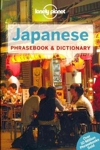
Japanese Audio plus Books click here Lonely Planet Japanese Phrasebook - Paperback Paperback - 271pp This phrasebook gets we regarding board the linguistic bullet train stopping all stations with conversational standard. If you wish To learn the shabu shabuya from a tonkatsuya this guide is only the ticket. Two-way dictionary Guidebook with pronunciation plus phrase-building Fail-safe little talk Practicalities - how with catch a bus or book a room About the Japanese Language Japanese is a code talked by over 130 million persons inside Japan plus inside Japanese emigrant communities all over the world. It is an agglutinative code plus is acknowledged with a complex program of honorifics reflecting the hierarchical nature of Japanese society with verb types plus certain vocabulary with indicate the relative status of speaker plus listener. The sound stock of Japanese Sino-Japanese word inside Japanese whenever a easier Anglo-Saxon word will right be translated with a Yamato synonymous. A much small amount of words has been lent from Korean plus Ainu. Japan has additionally lent different words from alternative languages extremely ones of European extraction more.....
About Japan
In the winter of 1974, a young Japanese adventurer called Norio Suzuki set off for the island of Lubang in the northwest Philippines, fascinated by tales of an elusive, death-dealing hermit who stalked the jungle trails in a World War II Japanese Army uniform. During a series of sniper attacks, 30 Filipinos had been killed and 100 wounded. The uniform indicated that the sharpshooter was the last holdout of the once-victorious Japanese forces that had conquered the Philippines in 1942.
Arriving on Lubang, Suzuki camped in the jungle and eventually managed to contact this lethal recluse. He turned out indeed to be a Japanese soldier, Lieutenant Hiroo Onoda of Army Intelligence. He had known the war was over, he told Suzuki, but nevertheless had considered it his duty to honour his army orders never to give himself up. "Only if my commanding officer rescinds my order in person will I surrender," he declared.
One of Onoda's military superiors, former Major Yoshimi Taniguchi, was located and he willingly travelled to Lubang. There Taniguchi read aloud a 28-year-old order that relieved Onoda, formally and honourably, of his duty. With a bow to the major, Lieutenant Onoda put down his gun and agreed to turn over his rusted officer's sword to Philippine President Ferdinand Marcos. At a ceremony in Manila, Marcos handed the sword back to Onoda, proclaimed him "a great soldier" and
issued a pardon for the crimes he had committed. Onoda was then escorted to an aeroplane that took him back to his beloved Japan, where more than 4,000 people crowded the arrival gates of the Tokyo International Airport to cheer the ultimate warrior. Proudly erect in a new blue suit, he emerged from the plane into modern Japan. He was the incarnation of a past made all the more remote by the great changes that had overtaken his homeland during his three decades in the Philippines.
What greeted the eyes of the man from the past was a vibrant new Japan, abounding with industry and material wealth. Since the war, Tokyo had been transformed from a largely wooden city of 5 million to an awesome steel-andconcrete metropolis of more than 15 million. Streets that in the 1940s had carried bicycles and rattling lorries by 1974 rumbled underneath the weight of several million Japanese-built motor vehicles—the majority private cars. Most women moved briskly through the streets in high heels and Western dresses or trouser suits. Metal foundries and chemical complexes lined suburban dual carriageways in areas once covered by peaceful quiltworks of rice paddies. And upon a meticulously constructed and computer-controlled track, a gleaming blue-and-white bullet train whipped along at speeds of 200 kilometres per hour and more.
The rest ofJapan moved at the same pace. During Onoda's long, self‑
imposed exile, the old island kingdom had emerged as an economic superpower. By the mid-1970s, its resurgent industries were producing more than those of France, West Germany and Great Britain. Not only automobiles, but also TV sets, tape recorders and stereo equipment streamed off production lines—for export and home consumption, as the Japanese had become adept and eternally eager consumers.
In short, the country Lieutenant Onoda had left in the mid-1940s had undergone a metamorphosis unprecedented for speed and thoroughness. Japan had not been a backward nation when it launched itself into World War II; it had outstripped its Asian neighbours in industry and trade—and armaments. But it had been a country of frugal people, dominated by the figures of the hard-working farmer, fisherman and small merchant. The Japan Onoda returned to had all the glitter of one of the world's wealthiest nations. "In our history of 2,000 years," said a member ofJapan's Diet (or parliament), "this is the first time that the Japanese have not had to worry about poverty. We are nouveau riche, a nation of farmers only a short time ago."
All these changes were too much for Onoda, who came from a traditional small-town family. Distressed by the growing materialism, he became an exile again. Moving to an outlying district of a distinctly less bustling and less industrialized nation, Brazil, he settled down on a small cattle ranch. "Everyone in Japan is concerned with money," he said; "I cannot live like that."
Most other members of Lieutenant Onoda's generation and their children have found being nouveau riche gratifying. As the 1980s dawned, most of Japan's people enjoyed to the full the fact
that they possessed amenities and advantages befitting a society as advanced as any on earth. This blaring complex of shops and discount caves engulfing 20 blocks in the north-central section of the city specializes in the products of hundreds of murderously competitive electronics companies. Here, shouting salesmen, rotating come-on lights and mammoth montages of price cards, have created one of the most uninhibited commercial extravaganzas on earth.
Some Japanese have echoed Onoda in deploring such blatant materialist excess, feeling that Japan's ancient spiritual and moral values are in danger of being buried under an avalanche of machines and gadgets. But in a recent poll, an astounding 89 per cent of the people pronounced themselves basically contented with their lives.
Whether for good or ill, the economic strides made by Japan since World
War II constitute nothing less than a miracle. Japan has risen literally from its own ashes. When the war ended in 1945 and Lieutenant Onoda's comrades came home, they found that virtually all of the major cities had been burnt out by 90,000 tonnes of bombs, mostly incendiaries, dropped from U.S. Air Force B-29s. Two cities had been almost completely obliterated by atom bombs. Industry had been hammered flat and 10 million people were unemployed. Farm output had fallen by almost one half and many of the defeated country's people faced the real threat of starvation. Across the nation's ruins raged a typhoon ofinflation that would cause prices to rise 600-fold between 1945 and 1950. The average annual income of a Japanese family had climbed to ,000. The unemployment rate stood at a minuscule 2.5 per cent. More than 99 per cent of all households contained refrigerators and colour television sets. Two out of three families owned a passenger car and at least one tape recorder; more than eight out of every 10 had electric sewing machines. And about 40 per cent of all Japanese homes were equipped with air conditioners or microwave ovens.
To observe this new Japanese consumerism—and in particular their insatiable appetite for electronic wares—at its gaudiest, the shopper needed only to visit Tokyo's Akihabara bazaar.
The road back from such desperate circumstances was paved from the very first with good intentions on the part of the victor and vanquished alike. Even more astonishing, the intentions were matched by deeds and by a growing sense of comradeship that, if occasionally frayed, has remained strong. The Japanese had expected the worst from the Allied Occupation forces, but they were pleasantly surprised when the Supreme Commander, U.S. General Douglas MacArthur, indicated in 1945 that Japan would govern itself, with no more than benign controls and encouragement from him. He initiated an agricultural reform bill that transferred ownership of a large portion of the country's arable land from the long-entrenched landlords to the farmers. He also weakened the power of the zaibatsu, the great industrial barons. Even more radically, MacArthur's young staffbestowed upon Japan a new democratic constitution.
Among other key provisions, the Japanese constitution set forth a bill of rights along American lines, gave women as well as men the right to vote, refashioned the Diet into a popularly elected Western-style parliament and turned Emperor Hirohito from a celestial ruler/into a benign "symbol of the state", who at last was free to pursue his heart's passion of research in marine biology. Shortly thereafter, the United States made clear its intention to see Japan rebuilt into an Asian "bulwark of democracy" and the "workshop of the Far East". MacArthur then removed the last bars to economic growth by cancelling all but token payments of war reparations.
From this point on, superb management and unceasing hard work (Akio Morita and Masaru Ibuka started the electronics giant Sony by scrounging radio equipment parts from the rubble ofbombed buildings) began to generate the brilliant success that is present-day Japan. The Korean War was to provide a critical push. That conflict brought a bonanza of hundreds of millions of dollars in foreign exchange, to pay for Japanese-made lorries and other heavy equipment, as well as housing and services for the United Nations troops who operated supply bases in Japan, and for units passing through on their way to the Korean fighting.
As a result, by 1952 Japanese industry had all but recovered from its defeat in 1945. The Japanese government proceeded to step in with an effective five-year plan for national growth that included tariffprotection and subsidies for key industries. With the government's help and blessing, huge new steel, shipbuilding and manufacturing complexes were formed by a fresh generation of industrial leaders.
In a way, these burgeoning industries benefited from the destruction wreaked during World War II. New and highly efficient factories rose from the rubble of the old. Within 20 years, the Japanese were forging steel in their up-to-date furnaces at a lower cost per tonne than most world producers, and Japanese shipyards had become marvels of cost-efficient production.
Criticizing the company or the union can be costly. One worker who had the
temerity to question a union wage position found himself shunned by his friends, who had been warned that association with him could poison their own futures. The man himself now makes some ,000 per year less than his quieter fellows.
Such disharmony among the work force is rare, however; most Japanese manage to put on a good face for the factory, without compulsion or undue inner effort. The general attitude seems to be summed up in the words of a Nissan employee: "I'll keep quiet and try to get promoted."
Japan's extraordinary economic gains have been achieved at a price—and not just of devoted and relentless work. There have been social costs as well. Growing industrialization has meant that the cities have burgeoned and have grown stupefyingly crowded. Japan is a larger country than many non-Japanese imagine, stretching more than 3,200 kilometres from its northernmost island to its most southerly one; but the total geographical area is only about as large as Finland, and it is inhabited by about 120 million people (versus Finland's 4.8 million). Further, only 29 per cent of Japan's land is usable for living space, agriculture and industry combined. Crowding is so chronic that, in the phrase of former U.S. Ambassador Edwin 0. Reischauer, Japan's "standard of wellbeing" is far lower than the country's standard of living would indicate. "You work in a modern building," said one government employee. "You eat in a good restaurant. You travel in a fast train. You come home at night and you have to be careful not to step on your sleeping child."
The one natural resource Japan needs most, but cannot import, is land.
Because of this lack of liveable space, most Japanese homes are small—by Western standards, they are cramped. The typical family of four living in the stockbroker belt outside Tokyo, Kobe, Osaka or Nagoya has a three-room bungalow slightly larger than a two-car garage, its interior as tightly packed with gear as the inside of a weekend sailor's cabin cruiser. The family members sleep on bedding that can be stuffed away to turn the bedroom into a daytime living room-dining room—which may open on to a tiny back garden of raked pebbles, a few meticulously arranged rocks, some moss and a bonsai (dwarf) tree or two. Japanese living in such modest retreats must spend up to four hours a day commuting to and from their place of work. And the commuter trains, especially those serving Tokyo, are without doubt the most abominably crowded in all the world. Tokyo's underground trains, for that matter, are even worse; during rush hours the last bodies must be jammed on board by a special breed of white-gloved platform attendants. Both train and underground travellers accept this crowding with equanimity, simply relaxing and swaying with the crowd. "Millions of commuters travel on trains as crowded as 19th-century slave ships," a Japanese once observed, "but show no signs of mutiny. Even with someone's newspaper shoved in their face and someone's elbow jammed in their side, they remain indifferent."
Crowding in the urban centres is even more relentless; one survey revealed that on working days some parts of downtown Tokyo are packed with 14,700 people per square kilometre. The average city-dwelling couple must somehow make do in a tiny two-room flat totalling 38 square metres.
With crowding have come environmental problems, including dirty air and water. Japan's rivers and harbours have been polluted, not only by commercial wastes but by the horrendous quantities of rubbish generated by this nation of freshly fledged but enthusiastic consumers. In recent years, the government has made a concerted attack on the pollution of the nation's waterways—and has made considerable progress in cleaning up the air as well. As for the rubbish, the Japanese make do with ingenuity. One urban unit in Aichi prefecture, a heavily populated area between Tokyo and Kyoto, has attacked the problem by spraying its fleet of dustcarts with perfumed deodorants. They now smell like peppermint and broadcast sprightly music as they drive through the streets.
By the late 1970s, Japan boasted a gross national product equal to France's and England's combined.
Shrewdly, the Japanese reinvested huge proportions of their GDP—as much as 32 per cent a year between 1956 and 1960—in order to modernize the old industries and provide funds for new ones. Helped by such massive financial boosts, the nation's car and lorry production soared from 100,000 units in 1960 to 2 million in 1970. During the early 1970s, Japan rivalled West Germany as the world's second-largest manufacturer of automobiles. Again, efficient plants and eager workers added up to remarkable productivity. By 1977, the average Japanese carworker made 33 cars per year, against 26 per year for an American worker; and the Toyotas and Datsuns sold at retail prices averaging ,500 less per car. Almost one fourth of the U.S.
automobile market had by 1980 been taken over by Japanese-made cars. At the same time, Japan's light industry surpassed the Swiss in the production of watches and the Germans in cameras, lenses and other optical equipment. The Japanese also carved out a large share of the world market for such disparate items as bicycles, skiing gear and consumer electronic goods. In 1983, total output surpassed a trillion dollars per year, as Japan had become not only America's principal commercial rival, but also the biggest or second-biggest trading partner of every nation in South-East Asia. A main motive force behind this astonishing climb to commercial dominance has come from the Japanese workers themselves. Probably no other people on earth throw themselves into their jobs with comparable devotion and energy. Japanese companies foster their employees' morale and productivity with devices that range from pep rallies to "voluntary speed-ups". At Matsushita, a giant of the electronic industry, workers in the main plants for years assembled in groups each morning to sing the company song through to its rousing end: "Sending our goods to the people of the world, endlessly and continuously like water gushing from a fountain. Grow, industry, grow, grow, grow!" They still recite the company's creed, which includes the following lines: "Alone we are weak, together we are strong. We shall work together as a family in mutual trust and responsibility." Toyota employs similar spurs. The company's weekly newsletter exhorts the workers to "challenge the highest peaks with our all-out efforts", and a mouth-filling corporate slogan continually reminds them that "With ingenuity and good ideas, we can find a solution to increased orders even beyond our present full capacity." And they do; in 1980, Toyota reduced its main plant's transmission-assembly time to a whirlwind 45 seconds, and in the course of three years had lowered the time it took to pack certain parts for shipment from an hour to 12 minutes.
Meanwhile, arch-rival Nissan, the maker of Datsun lorries and cars, organized worker volunteers into some 4,000 quality-control teams. One team offered to eliminate the time when machines were inactive by staying after hours for the service and clean-up that normally had been taken out of the final period of the day's run. Other teams have engaged in production experiments: "First we work one machine with the left hand, then another with the right," a quality-control volunteer explained. "Then we put one machine in front and another behind and work them simultaneously." During 1980 alone, the volunteers chopped 13.6 billion yen, then worth million, from Nissan's assembly costs, assisting the company towards profits the next year of 158.7 billion yen, or 0 million.
The devotion ofJapanese workers to their company's success extends to the nation's trade unions. The unions stage periodic rallies at which a great deal of noisy rhetoric is aired, and they do succeed in bargaining for higher wages. But in most corporations, the union's main function is to keep things calm, in case the ever-rising heat of production generates a labour explosion. As a former union leader phrased it, "The blue-bird of happiness does not dwell in the swamps of spite where the storms of struggle rage."
The Japanese, indeed, meet all their urban problems—the crowding, the pollution, the relentless bustle of the big cities—with a cheerfulness and an elaborate politeness that help to reduce the inevitable tensions of modern urban life. They also survive these problems and pressures through a special form of self-abnegation.
The Japanese tend to view themselves as members of a group, working towards group goals, rather than as individuals striving for personal advancement. Indeed, the whole Western concept of struggling for individual freedom or recognition is anathema to the Japanese. The American hero is the cowboy, who stands alone against the sky, no man's servant. The Japanese revere their warriors of old, the samurai, who vowed lifelong allegiance to a noble master. The Western concept is summed up in an old saying, "The squeaky wheel gets the grease." The
comparable Japanese saying is, "The nail that sticks up gets pounded down." Japanese society's governing ethic is embodied in an all-but-untranslatable concept called on. It derives from Confucian social philosophy borrowed long ago from China, whose fundamental precepts are mutual obligation and a respect for the natural hierarchy within relationships. The typical Japanese is most comfortable knowing where he or she stands in relation to
people above, below and on either side. When Japanese business people meet, they usually exchange business cards in a mutual status signal that governs the tenor of all their subsequent dealings. The white-collar worker derives pride and identity from carrying a company briefcase or wearing a company badge. Japanese men and women, like all other human beings, harbour private ambitions, resentments and impulses to rebel, but they keep such feelings deep inside, in deference to the overriding primacy of the group.
In a country so small and so densely packed, this sense of shared obligation and social duty is a national blessing and a life necessity. Otherwise, like creatures in an overpacked maze of a psychological experiment, the Japanese might erupt in violence. Instead, they take meticulous care to avoid any confrontation. When faced with an uncongenial suggestion, a Japanese will respond, "I fully understand your cordial proposition," or simply, "Let me think it over," rather than making objections or saying, "No." The closest he will come to a negative may be a scratching of the head, accompanied by the extended syllable "Saaaah"— indicating that it will be hard to agree.
The Japanese white-collar worker—today universally called a sarariman, or "salaryman", in one of the many words that the Japanese have adopted from English since the war—often seeks relief from the tensions of the workplace, as do many of his counterparts in the West, by visiting a bar before going home. Tokyo has 10,000 modest watering holes that cater for after-work groups of salarymen intent on relaxation and comradeship.
In lieu of alcohol, the work-frazzled young Japanese man may throw himself into marathon rounds ofpachinko, a vertical pinball game. Or he may head off for a bout of hitting bucket after bucket of golf balls at a mechanized, multi-storey driving range, a pastime that can be as frantic as the work from which he is trying to unwind.
In private, the Japanese forgo such frenetic pursuits, gaining satisfaction from common things and from humble, very personal pursuits such as gardening. This is a felicity derived from their ancient religion, Shinto, which holds that all natural things are holy. The sound of wind in a pine or the reflection of a flower petal in a pond's surface are real treasures to a Japanese.
The people also enjoy intellectual pursuits. Thanks to the nation's excellent, awesomely demanding and universally attended school system—with 90 per cent of all boys and 91 per cent of girls graduating from high school—virtually all citizens, from the northern tip of Hokkaido to the last little islands south of Kyushu, can read. And they do, assiduously.
Some 93 per cent of all Japanese take one of the nation's 125 daily newspapers. Tokyo's enormously influential Asahi Shimbun and the rival Yomiuri Shimbun each claim daily circulations of more than 12 million, making them the world's two largest newspapers.


